From targeted ads to job opportunities, your online presence can influence how companies, employers, and even strangers perceive you. In 2025, 76.9% of internet users actively took steps to protect their personal data, such as limiting access or managing privacy settings.
Understanding your digital footprint is essential in today’s digital world, where privacy concerns and cyber threats are constantly growing. In this guide, we’ll break down what a digital footprint is, how it works, examples of it, and most importantly, how you can manage and even delete it.
What Is a Digital Footprint?
A digital footprint refers to the data you leave behind when using the internet. This includes everything from the websites you visit to the emails you send, social media activity, online purchases, and even your IP address.
Your digital footprint can be categorized into two main types:
- Active digital footprint: Information you intentionally share online, like social media posts or comments.
- Passive digital footprint: Data collected without your direct input, such as cookies tracking your browsing behavior.
How Does Digital Footprint Work?
Digital Footprint works by following this process.
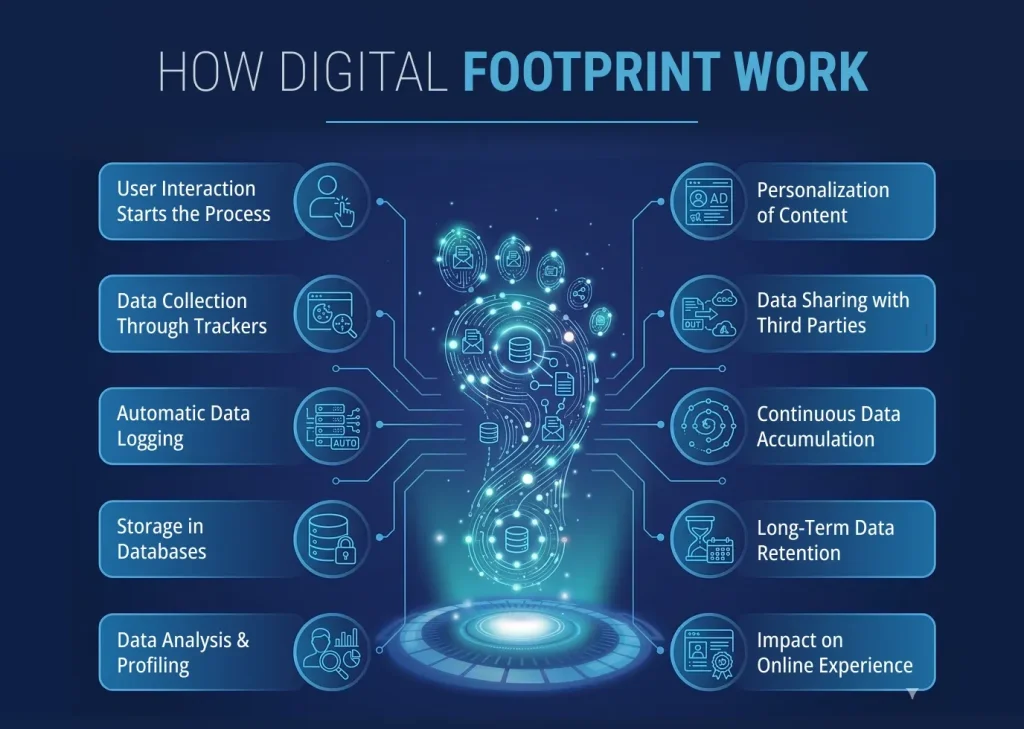
- User Interaction Starts the Process
Every time you browse a website, click a link, post on social media, or fill out a form, you begin creating a digital footprint. - Data Collection Through Trackers
Websites and apps use cookies, pixels, and tracking scripts to collect information about your behavior, device, and location. - Automatic Data Logging
Systems automatically record details such as IP address, browser type, search queries, and time spent on pages. - Storage in Databases
The collected data is stored on servers owned by websites, companies, or third-party data providers. - Data Analysis and Profiling
Companies analyze your data to understand your preferences, habits, and interests, building a digital profile. - Personalization of Content
Based on your profile, you are shown personalized ads, recommendations, and search results. - Data Sharing with Third Parties
In many cases, your data is shared or sold to advertisers, marketers, and data brokers. - Continuous Data Accumulation
Your digital footprint grows over time as you continue to interact online across different platforms and devices. - Long-Term Data Retention
Some data is stored for long periods, if you stop using a service or delete content. - Impact on Online Experience
Your digital footprint influences what you see online, how services interact with you, and even opportunities like jobs or offers.
Digital Footprint Examples
The following are examples of a digital footprint.
Social Media Activity
Social media platforms are one of the biggest contributors to your digital footprint. Every post, like, comment, share, and even the profiles you follow create a record of your interests and behavior. If you delete content later, it persists in cached data or platform archives, becoming part of your long-term online presence.
Browsing History
Whenever you visit websites, your activity is tracked through cookies and other tracking technologies. This includes the pages you visit, how long you stay on each page, and which links you click. Companies often use this data to understand user behavior and deliver targeted advertisements.
Online Purchases
E-commerce websites collect detailed information about your shopping habits, including the products you view, the items you buy, your payment methods, and your delivery addresses. This information helps businesses recommend products, but also adds to your digital footprint.
Search Engine Queries
Every search you make on search engines is recorded and analyzed. These queries reveal your interests, concerns, and intentions, helping platforms tailor future search results and advertisements specifically to you.
Email Communications
Emails you send and receive are stored on servers and can be retained for long periods. They may include personal, professional, or sensitive information, all of which contribute to your digital footprint.
Mobile App Usage
Mobile applications often collect data such as your location, device information, and how you interact with the app. This can include usage frequency, preferences, and even background activity, all of which add to your digital profile.
Online Forms and Sign-Ups
When you fill out forms, subscribe to newsletters, or create accounts on websites, you provide personal information such as your name, email, and phone number. This data becomes part of your digital identity and may be stored or shared by companies.
Location Data
Many apps and services track your real-time or past locations through GPS. This information can reveal your daily routines, frequently visited places, and travel patterns.
Comments and Forum Posts
Participating in online discussions, forums, or blog comment sections also leaves a trace. These interactions can reflect your opinions, interests, and behavior, contributing to your overall online reputation.
Multimedia Sharing
Uploading photos, videos, or audio files online adds another layer to your digital footprint. Metadata in these files, such as location and timestamps, can provide additional insights about you beyond what is visible.
Key Digital Footprint Statistics (2025–2026)
- 78% of internet users admit they have shared personal information online in the past year, showing how easily digital footprints are created.
- Around 79% of the global population (6.3 billion people) is now covered by data privacy laws, highlighting the seriousness of digital footprint concerns worldwide.
- 58.8% of users refused to allow their data to be used for advertising, showing rising awareness about how digital footprints are monetized.
- 56.2% of users restricted access to their location data, indicating growing concern over location-based tracking.
- 46% of users limit access to social media profiles or shared storage, reflecting increased control over public digital footprints.
- 79% of people are worried about how companies collect and use their data, indicating strong global concern about misuse of digital footprints.
- 75% of consumers know that companies sell their personal data to third parties, highlighting awareness of data trading practices.
- 63% of people accept privacy risks for convenience, meaning users often trade security for ease of use.
What Is an Internet Footprint?
An internet footprint is another term for a digital footprint. It specifically refers to the traces you leave while browsing the web.
While the terms are often used interchangeably, “internet footprint” focuses more on web-based activities, whereas “digital footprint” includes all digital interactions, including apps, devices, and online services.
How to Delete Digital Footprint?
Completely erasing your digital footprint is difficult, but you can significantly reduce it by taking the following steps:
Delete Old and Unused Accounts
Start by identifying accounts you no longer use, such as old social media profiles, forums, and shopping websites. These platforms may still store your personal data even if you’re inactive. Deleting these accounts removes stored information and reduces your online exposure.
Remove Personal Information from Websites
Search your name online to find publicly available personal information. If you find sensitive data on websites, you can request its removal by contacting the site owner or, where applicable, by submitting a “right to be forgotten” request.
Adjust Privacy Settings
Review and update privacy settings on all your active accounts. Limit who can see your posts, personal details, and activity. Setting profiles to private helps control what information is publicly accessible.
Clear Browser Data Regularly
Delete cookies, cache, and browsing history from your browser. This helps reduce tracking by websites and prevents the accumulation of stored data on your device.
Opt Out of Data Brokers
Data broker companies collect and sell personal information. You can manually request removal from these databases or use online opt-out tools to reduce the extent to which your data is shared.
Delete or Deactivate Social Media Content
Go through your old posts, photos, and comments and remove anything unnecessary and sensitive. Even better, deactivate accounts you no longer want to maintain.
Unsubscribe from Mailing Lists
Email subscriptions often involve sharing your data with marketing platforms. Unsubscribe from newsletters and promotional emails you no longer need to limit data usage.
Use Privacy-Focused Tools
Switch to privacy-focused browsers, search engines, and extensions that block trackers and ads. These tools help minimize the data collected about your online activity.
Use a VPN
A Virtual Private Network (VPN) hides your IP address and encrypts your internet traffic, making it harder for websites and third parties to track your online behavior.
Be Mindful of Future Activity
The most effective way to manage your digital footprint is to prevent it. Think carefully before sharing personal information, posting online, and signing up for new services.
Request Data Deletion from Companies
Many companies allow users to request the deletion of their stored data. Check their privacy policies and account settings to submit a data deletion request.
Monitor Your Digital Presence
Regularly search your name and review your online activity. Staying aware of what information exists about you helps you take action quickly if needed.
Conclusion
Your digital footprint is a powerful reflection of your online life. While it can offer benefits such as personalized experiences and convenience, it also carries risks to privacy and security. By understanding how your digital footprint works and taking steps to manage it, you can protect your personal information and maintain control over your online identity. In a world where data is constantly being collected, staying aware and proactive is the key to safeguarding your digital presence.
FAQs
Here are some frequently asked questions.
What are some common digital footprint examples?
Common examples include social media posts, browsing history, online purchases, email activity, and search engine queries. Even actions like signing up for newsletters and downloading apps contribute to your footprint.
What is the difference between an active and passive digital footprint?
An active digital footprint is created when you intentionally share information online, such as posting on social media. A passive digital footprint is collected automatically, such as tracking cookies and monitoring your browsing habits.
Why is your digital footprint important?
Your digital footprint affects your online reputation, privacy, and security. Employers, advertisers, and even cybercriminals can use this data to analyze your behavior or make decisions about you.
How can I check my online digital footprint?
You can search your name on search engines, review your social media profiles, check old accounts, and use online tools that analyze your data presence. This helps you understand what information is publicly available.
Is your digital footprint permanent?
Not always, but much of it can be long-lasting. Some data can be deleted or minimized, but once information is shared online, it can be difficult to erase, especially if it has been copied.
Table of Contents