This isn’t a paranoid concern; it’s actually a smart one, as the situation is more complex than a simple yes-or-no answer. Replying to a spam or scam text doesn’t immediately lead to a hack, but it does open a door you probably didn’t intend to open. Once scammers become aware that this door exists, they will exploit it.
Text-based scams have become one of the most common entry points for fraud. According to the 2025 Cyber Readiness Report by Consumer Reports, 30% of Americans who experienced a digital scam in the past year said it started with a text message or messaging app, up from just 20% the year before. That’s a significant jump in one year.
Can Text Messages Be Hacked?
Before we answer specific replies, let’s address a common question: Can text messages be hacked?
Yes, they can be hacked in different ways. SMS technology has security issues. The system carriers use, called SS7, allows some people to read messages or track phone locations without the user knowing. Though not common, this vulnerability exists.
Text messages share information, often containing links, numbers, and instructions. The risk comes from what they ask you to do. Smishing, or SMS phishing, is popular because people trust texts more than emails. They feel personal, like messages from friends or reminders from doctors.
Attackers exploit this familiarity.
Can You Get Hacked by Replying to a Text?
Replying to a suspicious text doesn’t directly install malware or hack your phone, but it poses significant risks. When you respond, scammers confirm that your number is active and valuable, making you a target for follow-up attacks. They may build trust through ongoing messages or quickly move to request personal information. In essence, while the hack doesn’t occur in the reply itself, it opens the door for scammers to exploit you.
Can Replying to a Text Be Dangerous? Yes, and Here’s Why
Let’s break down the specific ways that replying to a suspicious text creates real risk.
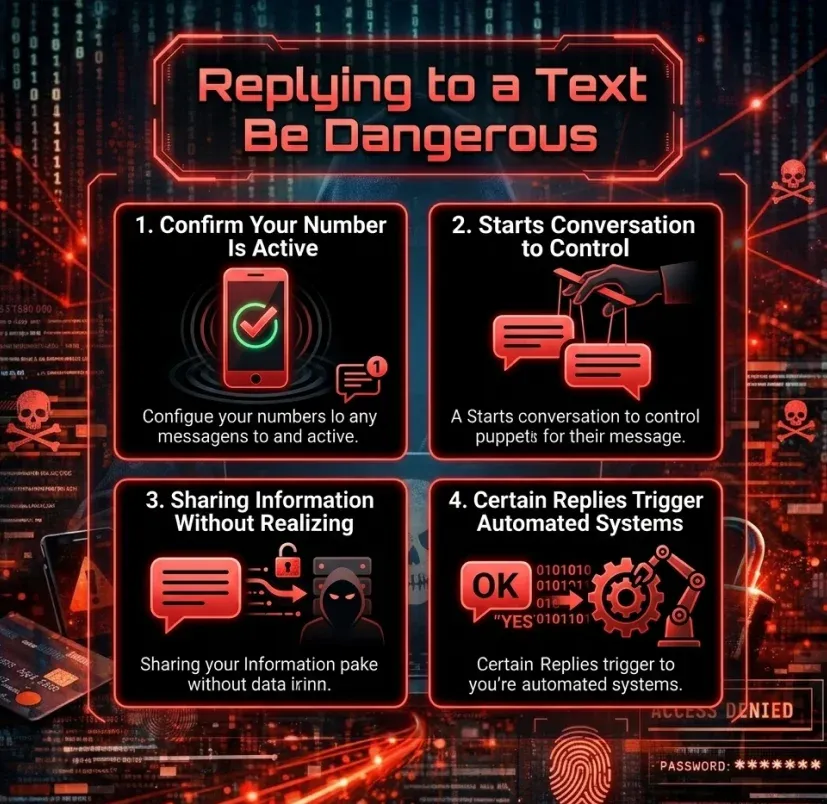
You Confirm Your Number Is Active
Mass smishing campaigns send texts to thousands of numbers, most of which go ignored. If you respond, even with “wrong number” or “stop,” your number may be flagged as active, leading to potential sales to other scams or targeted follow-ups.
It Starts a Conversation They Control
Sophisticated scammers don’t ask for anything up front. They establish a rapport, pose as someone legitimate, and gradually work toward the real ask. This is called pig butchering in investment fraud contexts, where victims are “fattened up” with friendly conversation before being led into a fake crypto platform or money transfer scheme. It has cost people hundreds of thousands of dollars. It starts with a reply.
You May Share Information Without Realizing It
Think about how you typically reply to a text. You might say your name. You might explain that you don’t recognize the sender. You might mention you were expecting a package, which would confirm details about your life. Even a short reply can contain identifiers that help scammers refine their approach or build a profile of you. That information, combined with publicly available information about you, can be used to craft a much more convincing follow-up attack.
Certain Replies Can Trigger Automated Systems
Some malicious texts are designed to get specific responses. “Reply YES to confirm” or “Reply STOP to unsubscribe” are phrases that, when responded to, can trigger automated processes on the attacker’s end, ranging from escalating you to a human operator to enrolling you in recurring spam lists or initiating a scam call campaign against your number.
What Happens If You Respond to a Spam Text?
The consequences vary based on who sent the message and what they wanted from it, but generally speaking, the outcomes fall into a few categories.
- More spam: Your number gets added to active lists, leading to more unsolicited texts and calls. This is the mildest outcome, annoying but not dangerous.
- Targeted follow-up scams: They use polished pitches from humans or systems, causing most financial damage since scammers know you respond.
- Social engineering: Your reply gives the attacker material to work with. They use details from your response to impersonate a trusted contact, institution, or authority figure in future messages.
- Phishing escalation: The conversation steers toward a link. The link goes to a convincing fake login page for your bank, your email provider, or a delivery service. You log in. They capture your credentials.
- Account takeover: If enough information is gathered through conversation, scammers can attempt to reset passwords, pass security questions, or SIM swap your number, effectively stealing your phone identity.
Can You Get Scammed by Replying to a Text? Real Examples
It helps to see how this actually plays out. These are common patterns, not hypotheticals.
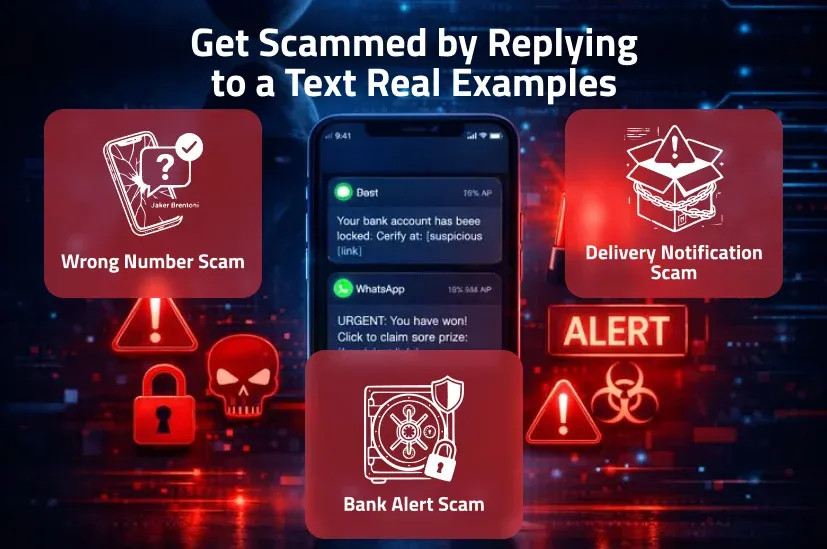
The “Wrong Number” Scam
You get a text meant for someone else and clarify the mix-up. A friendship forms, leading to investment tips or requests for help, creating emotional ties that make the asks feel more significant.
The Delivery Notification Scam
You get a message about a failed package delivery and are asked to confirm your address or click a link. This leads to a fee request through a strange payment link, resulting in theft.
The Bank Alert Scam
A message that appears to be from your bank warns of suspicious activity on your account. It asks you to reply to confirm whether you authorized a transaction. Replying opens a back-and-forth where you’re asked to “verify” your account details to stop the supposed fraud. The scammer is the fraud.
What to Do If You Already Replied
If you’ve already replied to something suspicious, don’t panic. It doesn’t mean you’ve been hacked. But there are some steps worth taking.
- Stop the conversation. Do not continue engaging. Every additional message gives the attacker more material and more opportunity to escalate.
- Block the number. On both iPhone and Android, you can block a contact directly from the message thread. Do it.
- Report the number. In the US, forward spam texts to 7726 (SPAM). Most carriers use this to flag and investigate smishing campaigns. You can also report to the FTC at reportfraud.ftc.gov.
- Check what you shared. If you gave out your name, email, or any account details, assess whether that information could be used to access your accounts. Change passwords on anything that might be at risk.
- Watch for unusual activity. Monitor your bank accounts, email inbox, and any linked accounts for the next few weeks. If someone is building toward account takeover, early signs usually include password reset requests you didn’t initiate.
- Enable two-factor authentication. If you haven’t already, turn on 2FA for your most important accounts. Even if a scammer has your password, 2FA creates a meaningful barrier to access.
How to Protect Yourself Going Forward
A few habits make a meaningful difference when it comes to text-based threats.
Never Reply to Unrecognized Numbers
Even if you’re curious, even if it seems harmless. Silence is the safest response. If it’s genuinely important, they’ll find another way to reach you or the message will have enough verifiable context to investigate through official channels.
Verify Through Official Channels
If a text claims to be from your bank, call the number on the back of your card. If it claims to be from a delivery company, go directly to their website and enter your tracking number. Do not use any contact information provided in the suspicious text itself.
Use a VPN on Your Mobile Device
A VPN like AstrillVPN encrypts your internet traffic and masks your IP address, which limits what third parties can observe about your online behavior. While a VPN won’t block an SMS itself, it provides a meaningful layer of privacy protection that makes it harder for scammers and data brokers to build a profile of you. On public Wi-Fi networks, especially where unencrypted traffic can be intercepted, a VPN is a practical and important safeguard.
Keep Your Operating System Updated
Software updates patch known vulnerabilities. Zero-click exploits and other message-based attack vectors often target outdated operating systems. Keeping your phone updated is one of the simplest ways to reduce your exposure.
Limit How Much of Your Phone Number Is Public
The fewer places your phone number appears online, the smaller your attack surface. Review what’s listed on social media profiles, old accounts, and public directories. Data brokers aggregate this kind of information and sell it, which is how mass smishing campaigns get their lists in the first place.
Conclusion
The question of whether you can get hacked by replying to a text doesn’t have a clear yes-or-no answer, but the practical takeaway is clear. Replying carries real risk. It confirms your number, opens a communication channel controlled by the attacker, and creates opportunities for manipulation that wouldn’t exist if you’d stayed silent.
The actual “hack,” meaning account access, financial theft, or identity compromise, rarely happens the moment you reply. It happens in the steps that follow. And every one of those steps requires your continued engagement to work.
The best defense is understanding how these attacks are structured. They’re not technical wizardry. They’re social engineers who work by being patient, plausible, and persistent. Knowing that is most of the battle.
FAQs
Can you get hacked just by replying to a text?
Very unlikely. A normal text reply does not give hackers access to your phone. However, it can signal that your number is active, which may lead to more scam attempts.
Can hackers install malware on my phone just because I replied?
No. Replying alone does not install malware. Malware usually requires you to download something, install an app, or interact with a malicious file or link.
Can I get hacked by clicking a link in a text?
Yes, this is where real risk exists. A malicious link can take you to a phishing page, try to download harmful files, or exploit a security flaw if your device is outdated. The danger increases if you enter personal information or install anything.
Can a hacker get information about me just from my reply?
Only limited information. Your reply can confirm your number is active and that you are likely to engage. It does not expose sensitive data unless you share details like passwords, codes, or personal information.
Table of Contents