A spoofing attack occurs when an attacker impersonates a trusted source to gain unauthorized access, steal sensitive information, spread malware, or manipulate communications. The FBI’s Internet Crime Complaint Center (IC3) recorded 191,561 phishing and spoofing complaints in 2025, making it the most reported cybercrime category, with financial losses increasing sharply year-over-year.
As businesses and individuals increasingly rely on digital platforms, spoofing attacks have become more sophisticated and difficult to detect. Whether it involves fake emails, forged IP addresses, counterfeit websites, or manipulated caller IDs, spoofing remains a major cybersecurity threat worldwide. QR-code spoofing (“quishing”) increased by 146% in early 2026, bypassing traditional email filters.
In this guide, we’ll explain what spoofing is, how spoofing attacks work, the different types of spoofing techniques, and the best spoofing prevention strategies to protect yourself and your organization.
What Is Spoofing?
Spoofing is a cyberattack technique in which an attacker impersonates a legitimate person, device, website, email address, or network connection to trick victims into believing the communication is authentic. The primary goal of spoofing is to gain trust. Once attackers establish that trust, they can steal login credentials, financial information, personal data, or install malicious software on a victim’s device. Spoofing can occur across multiple communication channels, including emails, websites, phone calls, text messages, and computer networks.
What Is Spoofing in Cyber Security?
Spoofing in cybersecurity is a technique where a hacker impersonates another user’s digital identity or communication source to mislead users and systems. The hackers change the identifying information so that the message, network traffic, or website seems to be coming from trusted sources.
Thus, for example, a hacker can send a fake email that appears to be from a bank or a technology company. The person who receives the message may trust it and click the malicious link, unknowingly providing the hacker with sensitive information.
In most cases, spoofing is a cyberattack method combined with phishing, malware distribution, ransomware, and social engineering campaigns.
What Is Spoofing in Computer Systems?
In computer systems, spoofing is a technique that involves changing the identifying information by which a device, software, or user is recognized to make the impersonator appear to be someone else. This tricky act can occur at different levels or through different channels, such as network protocols, operating systems, email, and web applications.
Computers and networks generally rely on identifiers, such as IP addresses, MAC addresses, domain names, and email headers, to verify legitimacy. Hackers tamper with these identifiers, being able to get around security measures or gain unauthorized access.
How Does a Spoofing Attack Work?
Although spoofing methods vary, most attacks follow a similar process:
Impersonation
The attacker creates a fake identity by modifying information such as email addresses, domain names, phone numbers, or IP addresses.
Building Trust
The fraudulent communication is designed to appear legitimate and trustworthy, often using company logos, branding, or familiar language.
Victim Interaction
The target receives the spoofed message, website, or communication and believes it is genuine.
Exploitation
Once trust is established, attackers persuade victims to reveal sensitive information, download malware, transfer funds, or grant access to systems.
Data Theft or System Compromise
The attacker uses the acquired information or access to conduct fraud, steal data, or launch additional cyberattacks.
Types of Spoofing Attacks
The following are some important types of spoofing attacks.
Email Spoofing
Email spoofing occurs when attackers forge the sender’s address to make emails appear to originate from a trusted organization or individual. Victims may be tricked into clicking malicious links, downloading infected attachments, or sharing confidential information.
IP Spoofing
IP spoofing involves falsifying the source IP address of network packets. Attackers use this technique to conceal their identity, bypass network restrictions, or conduct distributed denial-of-service (DDoS) attacks.
Website Spoofing
Website spoofing involves creating fake websites that closely resemble legitimate ones. These counterfeit sites are designed to steal login credentials, payment information, and personal data.
Caller ID Spoofing
Attackers manipulate caller ID information so incoming calls appear to originate from trusted organizations, government agencies, or known contacts.
DNS Spoofing
DNS spoofing redirects users from legitimate websites to malicious websites by altering DNS records or responses.
ARP Spoofing
When an attacker sends fake ARP messages on a local network, other devices receive false information about the IP address’s MAC address, allowing the attacker to carry out a man-in-the-middle attack and intercept and control communication between devices on the network.
GPS Spoofing
GPS Spoofing means sending bogus location signals to GPS receivers that, if they buy the lie, may mess up their navigation and any location-based services that use GPS location.
SMS Spoofing
SMS spoofing occurs when attackers send text messages that appear to be from trusted companies, banks, or contacts to trick recipients into disclosing information or clicking on malicious links.
Risks and Consequences of Spoofing Attacks
Spoofing attacks can cause significant harm to individuals and enterprises.
Identity Theft
Identity theft is one of the major dangers of spoofing attacks. Attackers posing as trusted organizations or individuals can manipulate victims into disclosing their personal data, such as names, addresses, login details, and financial information. They can use this data to commit fraud, open accounts without permission, or engage in other criminal activities in the victim’s name.
Financial Loss
Money is lost to spoofing attacks fairly often, and it impacts individuals and companies.
Cyber thieves might obtain banking details through fake emails, websites, or phone calls, change the payment instructions, or deceive victims into transferring money to the fraudsters’ accounts. Often, it is hard to recover the stolen money, and the financial loss can be extensive.
Data Breaches
Spoofing is a common method in planning and carrying out bigger cyberattacks. For instance, after hackers obtain employee login credentials or network access, they might steal secret company information, customer data, intellectual property, or other sensitive data. Besides the legal risks, data breaches might result in penalties from regulators and loss of customer trust.
Malware and Ransomware Infections
Many spoofing attacks are the first step toward installing malware on the victim’s device. If the target of the fraud clicks the link or downloads the attachment, they may install malware, spyware, or ransomware. These types of infection damage systems, steal information, and disrupt normal operations.
Account Compromise
Spoofing attacks often target user accounts by collecting usernames, passwords, and authentication information. Once attackers gain access, they can take control of email accounts, social media profiles, cloud services, and business systems. Compromised accounts may be used to spread additional attacks or access sensitive resources.
Reputational Damage
Organizations that become victims of spoofing attacks may suffer reputational harm, particularly if customer data is compromised or attackers successfully impersonate the company. Customers may lose confidence in the organization’s ability to protect their information, which can negatively impact brand reputation and customer loyalty.
Business Disruption
Spoofing attacks can interrupt daily operations by causing system outages, security incidents, and employee downtime. Businesses may need to allocate significant resources to incident response, forensic investigations, and system recovery efforts, resulting in reduced productivity and operational inefficiencies.
Loss of Customer Trust
When customers receive spoofed emails or communications appearing to come from a legitimate company, they may become hesitant to engage with future communications. Even if the organization is not directly responsible for the attack, the incident can erode trust and damage customer relationships.
Legal and Regulatory Consequences
Organizations that experience spoofing-related breaches may face legal obligations to notify affected parties and comply with data protection regulations. Failure to adequately protect sensitive information can result in fines, lawsuits, compliance violations, and increased scrutiny from regulators.
Network and System Compromise
Certain forms of spoofing, such as IP, DNS, and ARP spoofing, can allow attackers to intercept network traffic, bypass security controls, or launch further attacks against infrastructure. This can lead to unauthorized access, service disruptions, and broader security incidents across an organization’s environment.
Increased Risk of Future Attacks
Successful spoofing attacks often yield valuable information that cybercriminals can use in future campaigns. Stolen credentials, customer data, and internal information may enable attackers to conduct more targeted phishing, social engineering, or ransomware attacks, increasing long-term cybersecurity risks.
Common Signs of a Spoofing Attempt
Recognizing spoofing attempts can help prevent successful attacks.
Unusual Sender Information
One of the most common indicators of a spoofing attempt is suspicious sender information. An email, message, or phone call may appear to come from a trusted source, but closer inspection often reveals slight variations in the email address, domain name, or caller ID. Cybercriminals frequently use addresses that closely resemble legitimate ones to trick recipients into trusting the communication.
Unexpected Requests for Sensitive Information
Legitimate organizations rarely ask for passwords, banking details, Social Security numbers, or other confidential information through email or text messages. If a message unexpectedly requests sensitive data, especially with little explanation, it could be part of a spoofing attack designed to steal personal information.
Urgent or Threatening Language
Spoofing attacks often create a sense of urgency to pressure victims into acting quickly without verifying the message. Emails or calls claiming that an account will be suspended, a payment is overdue, or immediate action is required should be treated with caution. Attackers rely on fear and panic to increase the chances of success.
Suspicious Links and Attachments
Many spoofed emails contain links that direct users to fake websites or attachments that install malware. Before clicking any link, users should hover over it to verify the destination URL. If the link does not match the claimed organization’s website or appears unusual, it may be part of a spoofing attempt.
Poor Grammar and Spelling Mistakes
Although some cybercriminals create highly convincing messages, many spoofing attempts contain grammatical errors, spelling mistakes, awkward phrasing, or inconsistent formatting. Professional organizations generally maintain high communication standards, so obvious language issues can be a warning sign.
Generic Greetings
Legitimate companies often personalize their communications using the recipient’s name. Spoofed messages frequently use generic greetings such as “Dear Customer,” “Valued User,” or “Account Holder.” While not always a sign of fraud, generic salutations should prompt additional scrutiny.
Inconsistent Branding or Design
A spoofed email or website may attempt to mimic a legitimate organization’s branding but often contains subtle differences. Low-quality logos, incorrect colors, outdated designs, or unusual layouts can indicate that the communication is not genuine.
Unusual Website URLs
Fake websites are a common tool used in spoofing attacks. Users should carefully examine website URLs for misspellings, extra characters, unusual domain extensions, or slight variations from the official domain. Even a small difference in the web address can indicate a fraudulent site.
Unexpected Login Requests
If a message directs you to log in to an account via a provided link, proceed with caution. Spoofing attacks often use fake login pages to capture usernames and passwords. Instead of clicking the link, visit the organization’s website directly through your browser.
Strange Caller Behavior
In caller ID spoofing attacks, scammers may impersonate banks, government agencies, or technical support teams. Warning signs include requests for personal information, pressure to make immediate payments, threats of legal action, or attempts to keep you on the phone while gathering sensitive data.
Security Warnings from Your Browser
Modern browsers often display warnings when users attempt to visit suspicious or potentially dangerous websites. Ignoring these alerts can increase the risk of falling victim to a spoofing attack. Browser security warnings should always be taken seriously and investigated further.
Spoofing Prevention Strategies
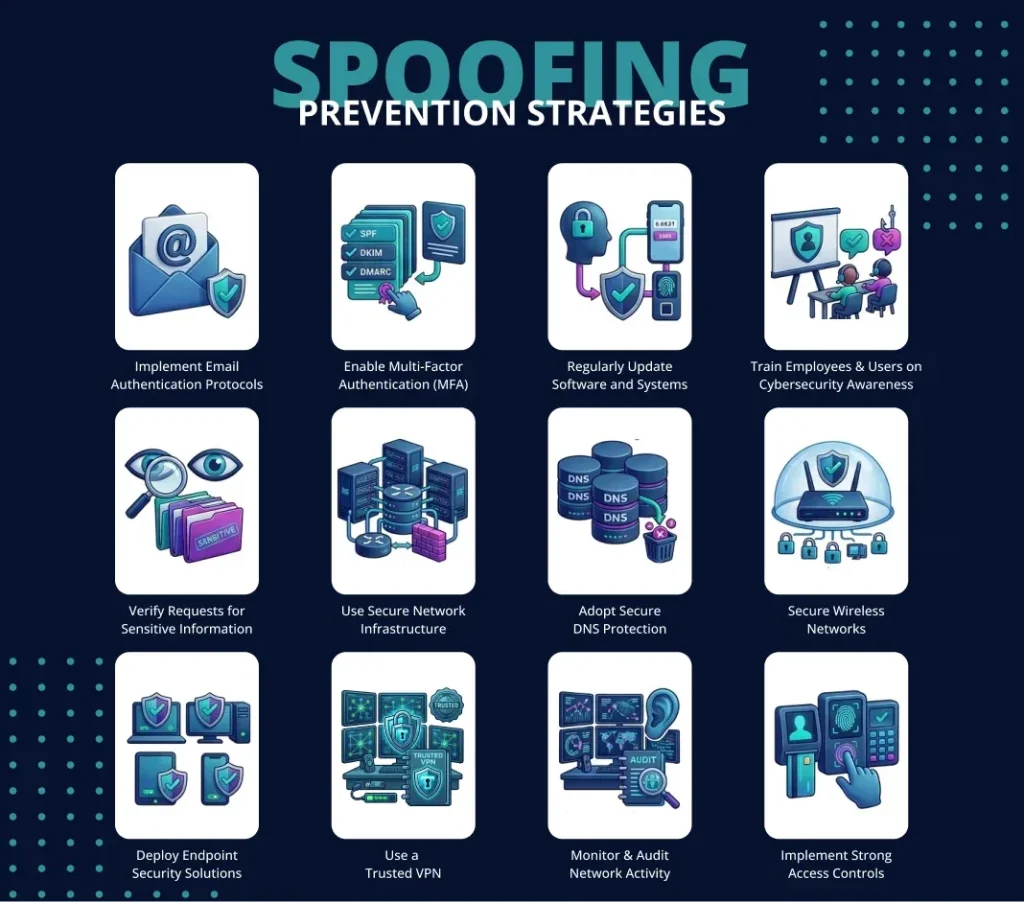
Effective spoofing prevention requires a combination of technology, awareness, and security best practices.
Implement Email Authentication Protocols
Organizations should deploy email authentication standards such as SPF (Sender Policy Framework), DKIM (DomainKeys Identified Mail), and DMARC (Domain-based Message Authentication, Reporting, and Conformance). These protocols help verify that incoming emails are genuinely sent from authorized domains, reducing the risk of email spoofing attacks. Properly configured email authentication can prevent attackers from impersonating trusted businesses and individuals.
Enable Multi-Factor Authentication (MFA)
Multi-factor authentication adds an extra layer of security beyond passwords by requiring users to verify their identity with a second factor, such as a mobile device, an authentication app, or a biometric scan. Even if attackers obtain login credentials through spoofing attempts, MFA can help prevent unauthorized access to accounts and systems.
Regularly Update Software and Systems
Cybercriminals often exploit outdated software vulnerabilities to carry out spoofing attacks. Keeping operating systems, applications, browsers, and security software up to date ensures that known security flaws are patched promptly. Regular updates reduce the likelihood that attackers will successfully compromise devices or networks.
Train Employees and Users on Cybersecurity Awareness
Human error remains one of the leading causes of successful spoofing attacks. Organizations should provide ongoing security awareness training to help employees recognize suspicious emails, fake websites, fraudulent phone calls, and other spoofing tactics. Educated users are more likely to identify threats before they cause damage.
Verify Requests for Sensitive Information
Users should never share passwords, financial details, or confidential information based solely on an email, phone call, or text message. Any request involving sensitive data or financial transactions should be independently verified through official communication channels. This simple practice can prevent many spoofing-related scams.
Use Secure Network Infrastructure
Organizations can strengthen their defenses by implementing firewalls, intrusion detection systems (IDS), intrusion prevention systems (IPS), and network monitoring tools. These security measures help identify suspicious traffic patterns and detect spoofing attempts before they can impact systems or users.
Adopt Secure DNS Protection
DNS security solutions help prevent DNS spoofing attacks by validating DNS responses and blocking malicious redirections. Technologies such as DNSSEC (Domain Name System Security Extensions) provide additional verification mechanisms that ensure users are directed to legitimate websites rather than fraudulent ones.
Secure Wireless Networks
Unsecured Wi-Fi networks can expose users to spoofing and man-in-the-middle attacks. Using strong Wi-Fi encryption protocols, changing default router credentials, and limiting network access can help protect communications from interception and manipulation.
Deploy Endpoint Security Solutions
Modern endpoint security tools, including antivirus software, anti-malware solutions, and endpoint detection and response (EDR) platforms, can identify malicious activities associated with spoofing attacks. These solutions provide real-time protection and help contain threats before they spread across systems.
Use a Trusted VPN
A Virtual Private Network (VPN) encrypts internet traffic and helps protect users from network-based spoofing attacks, especially when connected to public Wi-Fi networks. By securing data transmissions, a VPN reduces the risk of attackers intercepting communications or impersonating network services.
Monitor and Audit Network Activity
Continuous monitoring of network logs, user activity, and system behavior helps organizations identify unusual patterns that may indicate spoofing attempts. Regular security audits and vulnerability assessments can uncover weaknesses before attackers exploit them.
Implement Strong Access Controls
Limiting user privileges and enforcing the principle of least privilege can reduce the impact of successful spoofing attacks. Access controls ensure that users only have access to the resources necessary for their roles, minimizing opportunities for attackers to move laterally within a network.
Conclusion
Spoofing is one of the most widely used deception techniques in cybersecurity. By impersonating trusted sources, attackers can trick users into revealing sensitive information, installing malware, or granting unauthorized access to systems. From email spoofing and IP spoofing to fake websites and caller ID manipulation, these attacks continue to evolve in sophistication.
Understanding how spoofing works, recognizing warning signs, and implementing strong security practices are essential steps toward reducing risk. By combining user awareness, security technologies, and proactive monitoring, individuals and organizations can significantly improve their defenses against spoofing attacks.
FAQs
Here are some of the most frequently asked questions.
What are the different types of spoofing attacks?
Common types of spoofing attacks include email spoofing, IP spoofing, website spoofing, DNS spoofing, ARP spoofing, caller ID spoofing, SMS spoofing, and GPS spoofing. Each method involves impersonating a trusted source to deceive victims.
What is email spoofing, and how does it happen?
Email spoofing occurs when attackers forge the sender’s email address to make messages appear to come from a legitimate source. This is typically done by manipulating email headers and sender information.
What is IP spoofing in network security?
IP spoofing is the practice of falsifying the source IP address in network packets. Attackers use it to hide their identity, bypass security controls, or facilitate attacks such as DDoS campaigns.
Why do hackers use spoofing techniques?
Hackers use spoofing to gain trust, steal sensitive information, distribute malware, bypass security measures, and increase the success rate of phishing and social engineering attacks.
What are common signs of a spoofing attempt?
Warning signs include unexpected requests, suspicious sender addresses, generic greetings, unusual website URLs, urgent messages, poor grammar, and requests for sensitive information.
What tools or technologies help prevent spoofing?
Technologies that help prevent spoofing include SPF, DKIM, DMARC, multi-factor authentication, email security gateways, firewalls, intrusion detection systems, DNS security solutions, endpoint protection software, and VPNs.
Table of Contents